Dating: The Game Where We're All Losers

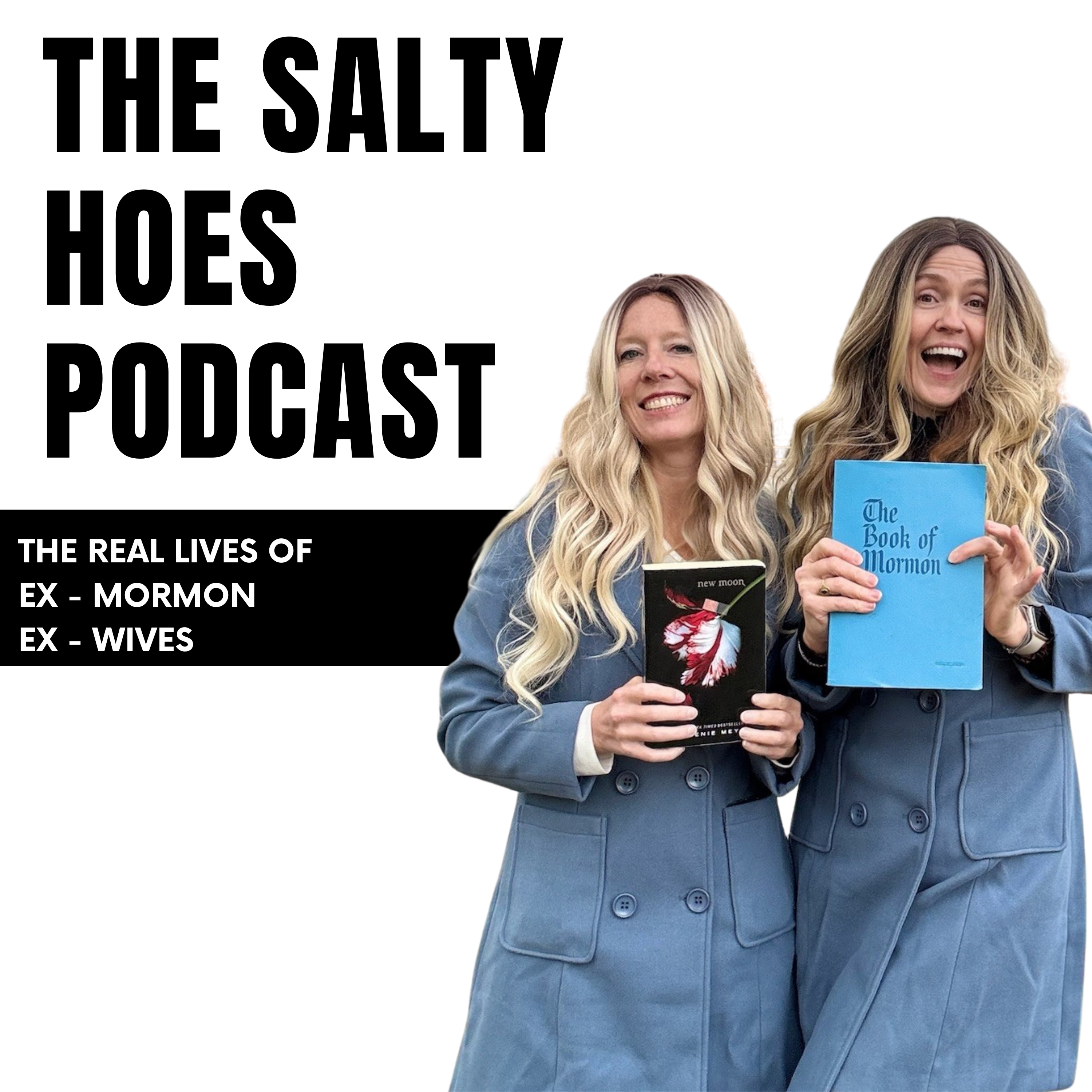


Dating sucks for all of us, right? Whether you're a salty hoe or a salty bro, this process probably sometimes makes you feel like you're getting a colonoscopy sans anesthesia. What on Earth is wrong with dating, gender roles, and capitalism? Explaining this all is a tall order, but the Salty Hoes never back down from a challenge. We talk about Caliban. We talk about witches. We talk about the D. And a little bonus commentary on MomTok and how the patriarchy screws us all.
0:21 Hello everybody, and welcome back to the Salty Hose. This is Claire. This is Mel. And together we are. The salty hose. Coming at you again, deep from behind. Because we know Mel likes that noy. Love it deep from behind. Deep from behind the Zion curtain. So how are you today, Mel? How's your week been? Oh, I'm doing OK. You know, it's one of those kind of cold winter days where I can't wait to get back to summer. Flip flops, shorts, tank tops, warmth. This air could be better. It could be way. Better like, please let the snow come, right? Yes. For those of you outside Utah, we're having an unusually just well, actually, there's just literally no snow. There's no snow and I don't know if this is unusual or if this is going to be our new normal with climate change. Yeah, I guess it's all Canada's fault though, right? Sure, how?
1:17 I guess this year that's what they're it's like to do with high pressure from Canada or something, which is why we're not getting the snow. Oh, those Canadians. Those bloody Canadians. I feel like bursting into song from the original South Park movie. Do you remember that? Blame Canada. Blame Canada. Love it. That's, Yeah, all their fault, yeah. How was your week? I am trying to be really intentional to not go Oh my God, it was crazy because I realized that I do say that every week. But it's true every week. Well, it is, but I'm trying to like shift my focus And, you know, I did have, as you know, I'm, I'm in some classes and there was an aspect of the class this week that was just so enraging and also fascinating. Oh, tell me more.
2:05 Well, it was basically about Badgers. Badgers. Badgers like the animals. Like the animals. So like, bear in mind this is a poetry class. Well, it's actually a literary literary traditions class, if I'm getting technical. But we were discussing the poetry of yet another Ye Olde time white English poet. Such diversity. That's the only kind though, right? Oh, it's the only ones that are good. Oh, I'm sorry, yes. That's right. I mean, other ones exist, Melissa, but clearly, clearly they're not good. Yeah. So Badgers. We got into this badger discussion specifically about the the howl of a badger.
2:47 Do Badgers howl? Badgers howl. Interesting. And was it more of a howl or a scream? And I was just there going, sweet baby Jesus. Literally what? Why? Just how is this happening? Like I am here for intellectual stimulation because, you know, I'm not having stimulation of any other kind. So the Berean could do with a wee bit of probing. And after 20 minutes I lied that I had heard a badger signed because I just wanted it to stop. I love that, yeah. It's kind of like faking an orgasm. Right. Yes, you're like, please just let it get over. Just like. There you go, I'm.
3:28 All done. I'm all done with this now. Is it? When you fake an orgasm? Is it more of a howl or a scream? Well yeah, I guess it depends on on who you're with. I don't know but when if you Google a badger howl or scream it could sign similar. Interesting. I'm going to have to look that up now. Yeah. Channel, you're in her badger next time you have to fake an orgasm. I hope I never have to fake one again. I hope. This for you too. I hope that nobody has to, but let's get real. That's a whole other podcast episode though. Here we are. Well, what are we talking about today, Claire? Today we are talking about something that's going to signed like Ridge Beauty, but it's it's it's really not. I have this question, why do men hate women? And I know immediately that like the gates of hell would open and I would be called a Dick puncher, but that's actually not where I want to go with all of this today. I actually want to try to make sense of like, you know, there's just like anybody that's been in the apps, there's just like a weird tension or dare I call it animosity. I don't know what.
4:33 How do you feel in the apps like? Yeah, I think that's right. I mean, I feel like a lot of the BIOS I read, there's some thinly veiled or sometimes not even veiled at all contempt for men towards women. Now, I do kind of wanna mention that we're coming at this from the female point of view. We're both women. And as I understand it from some of my male friends that are on the apps, they feel something similar, right? It feels hard to them too. Maybe they feel some contempt coming their way. So I do want to acknowledge that. But we're going to speak from our own perspective since I mean, really, that's all we can do, right? That's all we have. But I love that you mentioned that because I think that is literally from the gecko. The point to make is that like, who is winning here? Nobody, nobody.
5:21 We're all losing. Together. We're all losing together and I think that's, you know, the point that we're missing because it's like you talk to anybody and everybody's ex-husband or ex partner is a narcissist, right? When you're talking about the men, right, And everybody's ex-wife or ex partner is a raging bitch like and that can't. Statistically be true, it can't. It just like can't be true. Not all men are narcissists and not all women are bitches. It cannot be correct. It cannot be correct so. What's happening? Well like had tip to the situations that are because you know those do happen. And actually funny story, a friend and a colleague of mine was working in another setting and heard my ex husband's girlfriend at the time talking about this horrendous ex-wife. Oh no, they were talking about you. Talking about me, but this, this person was a real 1. You know, you got those friends that are just like a real 1. Yep.
6:21 And she walked over and she goes, excuse me, but I need to like, correct this conversation. Little interjection. It was so. Cute and she was she was like, I have known Claire for over 10 years and you know, she said lovely things and she is like, that is not the same person you're describing. I had never met this woman. So obviously she was going on the descriptions of me that she had heard. Sure, which, you know, is is totally fine question mark. I don't know ish ish, but it brings us back to this point like the way we take our stories. I'm certainly guilty of it. I think if I was being truthful and doing a deep dive, you know, I mean, there's, there's been some egregious situations, but.
7:03 I was going to say, I mean, do I need to bring up the shitty pants again? Yeah, well, that will live forever. So yeah, that was not a good situation. But how did we get here? How did we get here? So a lot of things, it's actually a lot of things that put together make a lot of sense. We're gonna start with a scientific term here. So the accumulation of differences. I believe that's a sciency term too. Mel, you're the scientist. Accumulation of differences. OK, I think I need a little bit more clarity on that term. So if we think about biological evolution, we are talking about the accumulation of differences over time. That's certainly one way you could define evolution. It's a good way to define evolution, yeah, But I suspect we're talking here more about a cultural evolution than a biological evolution, although obviously that's going to come into play when we're talking about sex and gender and gender roles.
8:03 So I want to talk about this amazing book that I can't believe I've never read before, that just made me think about all of this and it came together like this. Amazing possible solution to your question. What do we do about all of this? So it's called Caliban and the Witch. I love the title. I've not read it, so you're going to have to break it down for me. Well, it's funny, I originally thought it was like an older book, but I I guess it came out in like 2004. So it's by Sylvia Frederici. Frederici Frederici. I don't know. Italian is not my strong suit. Same. So miss, Miss Sylvia is it doctor?
8:46 Sylvia. I is it, I don't know. I don't know. But let's just call her Doctor Sylvia. She deserves it, honestly, after writing this book because it was really incredible. So she brought together a ton of sort of social ills, control, economic, all of these things to kind of explain why we're in this honestly shitty dating situation right now. I love it. We're getting all academic on this problem. We're. Getting academic on the problem of dating in 2025 in Utah specifically. So she goes all the way back to like the 4th century, Yeah. Like we're, we're going, we're going far back today. And when Christianity became like sort of a formal religion and the dudes in Christianity, we're kind of scared of the ladies.
9:41 So yeah, you, you might have seen a little story we posted this week that talked about one of the prophets. I don't know if he's the current one, the new one. I can't keep track. I have completely lost track. I don't really follow it at all. That kind of makes me happy. Though I know, right? Yeah, you're just like, I don't know, because I don't. Care, blissfully unaware. Yeah, well, he had made the point that women, women getting educated, which he said he he did agree with, but that it was frightening men, direct quote, frightening men. Oh my God, yes. But this is actually, this isn't a new idea. So back in this the 4th century with the rise of Christianity or you know, the sort of solidifying it as a religious perspective.
10:29 So we're kind of talking like Constantine here, right, When he adopted Christianity, moved the capital from Rome to Constantinople, Yes. Is that kind of the time frame we're in? Yeah, just like people were getting on board with this idea. It's becoming a state religion. In other words, yeah, like a recognizable, you are a Christian kind of a situation. So the the men's was frightened of the women's even back then all the way back to the 4th century. And they particularly when it came to desire and sexuality. Oh yeah. So, yeah, frightening. We have such power. So they were mostly afraid of their own feelings.
11:10 OK, So their own feelings of desire. And instead of addressing that, they were like these lady people are making us feel weird. So something like needs to be done about it. Does that sound familiar? I mean, yes, it does sound kind of familiar. You know, so think about the what is she? What was she wearing? You know all of that kind of. Oh, so like pushing responsibility onto women for the sexual urges that they might be having? Exactly. OK, so this is where it kind of started, although it was followed by a period where actually sex work and prostitution was was normalized and actually widely accepted. But this is where and anybody who's been in the Mormon church, and this Mel and I have talked about before, the shame around sexuality started at this point.
12:00 OK, so this is where we can trace it back to. So if tracing things back to the roots helps, I don't. I mean, I think a historical perspective is always good, right? We didn't just arrive like in this vacuum, right? We stepped into thousands of years of cultural evolution. So I think it makes sense to explore some of these strands. Yeah. And I love the word evolution here because men and women, and obviously we're speaking very heteronormatively, Yeah. And cisgendered fashion here. But there really is a historical basis for why we feel the way we do.
12:42 Probably abide each other. So we've got this little seed planted, and then we move through a lot of centuries. And so really everything that happened before the 16th century and actually things were, were quite good from a gender perspective. There was not the same kind of feeling of defensiveness or, you know, pitted against each other. Like there was no need for, say, a feminist movement. At this point. Because people were just chilling. And part of that sort of pre feudal times was the subsistence economy. OK, right. So like people just subsisted. So in other words, maybe we didn't have time for some of this conflict because we were just focused on survival.
13:27 Well, and also yes, and Labour had not been commodified at that point. Interesting. So people were like growing their wee vegetables reason their cars or whatever to go for meat or rabbits, whatever people are they did. I don't know really what people at between the the 3rd and the 16th century, but you know, like you built your home with your hands and you didn't like go get a custom home builder, you know so. OK, so there's less division of Labor, you're saying? Yes, in a societal way, but also maybe in a household as well. Yes. So the household, the family, whatever, you know, this little unit was all about were, you know, how do we subsist like together and make sure everybody's fed, make sure everybody's warm when they need to be warm, everybody is taken care of.
14:17 Because obviously, like today, that's the majority of people, right? You had the rulers and the people with power and influence, money, all that. But you know, that was how most people lived, right? So people were honestly like pretty chill. And they just, I'm not saying it was like, you know, let's make Merck a great again by going back to the third, the 4th century. You know, I don't think I want to go back to a time without birth control or modern medicine or vaccines or clean water because, you know, I, I hear what you're saying about gender roles, but we do want to be careful about romanticizing the past. Oh hell yeah. I mean, and there were people like Club to Death with axes and witches, which we'll we'll get into. That was a wee bit.
15:01 But right, And Europe was not a peaceful sort of place, no really at any time in history. Yeah, I mean, there was a lot of stuff going on. Yeah, some of the wars that you read about in sort of the middle of of Europe, like the 30 Years War in places that depleted the population up to 50%. Oh yeah. So it wasn't like all sunshine and roses. That's not what we're saying, fam. Absolutely not. Yes. We are not advocating for a return to. Digital European values? No, thank you. We could like start a political party and go next level. We'd be like we would like to make a return to 10th century Europe.
15:42 I mean, I'd be dead of sepsis. So that's, yeah, life expectancy was probably what, like 40 then or something? I don't. Know, I mean, that's actually kind of an interesting, fun question, right? So the life expectancy on average was quite a bit lower. Yeah. But it, it wasn't like some people have the idea that like the average was the time people lived. So they're like, Oh yeah, everybody died in their 30s. But actually that's not the case because you're averaging things together. There was a really high rate of infant and juvenile mortality, as well as things like death and childbirth. But if you lived through those things, you were probably fairly likely to live to a decent age. 6070 even I think was not really uncommon. Will you be robust, right? Like it's like survival of the fittest and you made it.
16:25 Well, yeah, I mean, we want to be careful with that term, but sure, yes. You're like, no, no, don't go there, don't go there. So yeah, that's not saying it was perfect. There was very, very bad things. But in terms of gender, things were just like, very, very different. Because I think sometimes, you know, we like to put it into the terms of, well, it's always been like this, like these are natural, you know, kind of roles. And that's just not accurate, no matter what you think. About it. I hate that so much. I really do. You hear this a lot today, like and you hear it not just in the Mormon church, but like in society in general. People are like, Oh well, I'm just a man. That's my nature. I can't control myself because my sexuality is so much more powerful than yours.
17:09 Like you wouldn't understand my sexual urges as a man are so much more powerful than ours. But, you know, but if you rewind 1000 or 2000 years, actually everyone understood the opposite. Everyone thought women were the highly sexualized, wanton, you know, gender that could not keep their primal urges under control. Everybody knew it. Women were just more sexual than men. Whereas today everybody just knows that men are more sexual than women. Yeah. And both of these things are actually wrong. Yeah, you're like, this is not accurate. No. And again, who is winning here? We're all losing. We're all losing. Yeah. And like, this is the point is like, it's it's almost like colonialism in a way, right? Like classic colonialism.
17:54 As you go to a peaceful spot, you divide the community, create arbitrary groups or classifications that aren't even there. And then people start to fight each other. And the colonizer just sits back and goes ha, ha, ha. And I kind of feel like that between men and women. And I were at this terrible like stage of dating because the enemy is each other. Yeah, or maybe you take, you know, conflict that's already there and exacerbate it, right? Throw fuel on the fire. That's another like thing right out of the playbook. Yeah. All right. So to summarize this book, tell me, tell me more. What's the central thesis here? So that is actually kind of a difficult question, especially with somebody with the brain like mine, because there is so much in this book.
18:37 Everybody has to read this book. We should have a Salty Hose book group. It's it's a short read. I think it's just a little over 200 pages. But honestly it covers everything from a great span of centuries and also economics. There's some Marxism in there, even though a lot of this stuff predates Marxism as we understand it. But to give you like the Cliff Notes version. So we start off in the 4th century talking about religion, we move through feudalism, and then you have this transition from feudalism to capitalism, and then you get the intersection of patriarchy and how patriarchy was really needed in order to make capitalism work. So we've gone from that overly ideal, idealized by myself like little setup of gender in terms of men and women subsistence economy.
19:34 So men, men and women work together probably in equal among some most occupations, not occupations, obviously not the way that we understand it. Money was a very different concept back then. Of course, it did exist, but not in the way of, you know, your little direct deposit right now for all your labor and then the way we exchange money. But but it did exist. But men and women were in things called guilds. Oh yes, the guilds. The guilds and so, you know, think of that as like your little professional body equivalent today. And this is sort of high society was organized and women dominated in the medical fields in particular.
20:17 And that was true right up until the 16th century. And actually, there was birth control. But you believe. Oh, I believe it. Yeah, I just. You're like, it was not effective. I mean, not as effective, yeah. But it was like herbs and, you know, they'd make little suppositories and all kinds of concoctions out of it to, you know, make your period come quickly or even, you know, to force a miscarriage, all those kinds of little tricks. But because obviously people had to learn those back in the day. And then we come into the plantation era and this is where things really started to change to how we recognize them today.
21:03 So we were very communal back then. We had lots of common space. Think of it like, have you ever heard the idea that the word like? Gossip is bad. Oh yeah, I love gossip though. It's it's actually a good thing. It's one of those things that's like, historically being demonized. But that's how people lived, right? They got together, they talked, they shared. But now it's seen as, like, gossipy, you know, a bad thing. Is it because the term's been feminized? Is it a bad thing? That's what it is that's associated with women. It's like slut, right, whore, all the the terms that you have to preface with man if you want to relate it to a man. I mean, in my personal experience, men like to gossip just as much as women.
21:45 Yes, 100%. Have we seen the Real Housewife husbands? Like yeah, they love a good to be gossip too. So things like that. Or for example, if you hear when you're like discussing aid, aid. I feel like I'm very Irish there aid. I love it when you sound Irish. And it's really funny to see actually how the subtitles interpret it, but I digress. So when you look at Eid, say, for example, in a developing nation, a lot of times people will come in and be like, Oh my goodness, look, the women have to walk 2 hours a day to get water. Like let's fix that. Let's put water in the village. A lot of times people don't like it because that's actually their time together.
22:33 Oh, to talk, to walk together, to be away. And so it's kind of a a case of, you know, Western ideology going, we know what's good for you. Let's isolate you and make it easy to get your water so that you don't like talk to your friends and your people and get that sense of community anymore. I'm not suggesting that's a conscious idea when you're putting in water in a village to stop The Walking, but it's all part of going back to the 16th century idea of enclosure. So enclosure was basically like people lived on the land together and they farmed and they did all the things. And then the English who are kind of responsible for all the major fuck ups in the world.
23:16 Well, not all of them. I mean, to be fair, we've taken that torch and carried it forward. That is true, but I mean, where did a lot of the people from here come from? So the Puritans brought it with them and I am being a little rude just because of marriage. And we have a history with English, you did say. I think that's fair comment. So yeah, just. Kidding, my brother-in-law is actually English and I adore him so he's wonderful. We always tell him you're not great collectively, but individually we like you. So So yeah, the English brought about this idea of enclosure. So basically equate it to, you know, how everybody is property lines 9 and fences and walls. That was from the 16th century. People were a lot more communal, wasn't really like a bindry thing. And so we separated into these little enclosures, and as a result, we became quite isolated back then in the 16th century. So also at this time, we're moving away from feudalism to capitalism, and all of these factors needed to come together in order to make it work.
24:24 So we talked earlier about like, the family unit and its purpose, right? So for subsistence, it was like everybody got stuck in, grew the food, built the house, did all the things, annoyed the family unit is coming together as basically the ability to feed industrialization and capitalism. You're raising the workforce, right? So this is this is where we have come to at this point. So a lot of really interesting things start to happen here in terms of gender and the division of Labor. And put in really simple terms, it's just the idea that night labor becomes commodified, so the dudes need to go out to work and the little ladies need to stay home. That makes sense.
25:11 And they need to stay home because of course, we're the ones that give birth to babies. Yes, Right. So it's more difficult. Is that the idea, at least on a continuous basis, for us to be? I mean, it's, it's hard to go work in a factory 16 hours a day if you're nursing a baby. Is that? It's very difficult. That's that's like the compassionate view. OK, I think. All right, interesting. It has more to do as well with the idea that if you are laboring all day, which hello would be marvelous, that you come home to a meal, that you come home to things taken care of, that you don't have to do any work like you did in the subsistence economy. So you've gone and done your paid work and you get to come home and relax night and everything is taken care of. I mean, you and I have single mom. Did we?
26:07 We go, we work long hours and wouldn't it be lovely to come home to like your dinner on the table? Sure. And a clean house just magically cleaned because I come home on a Friday and I'm like, holy shit, what happened? And it's just because you're tired, right? So you maybe don't do the dishes every day and then they build up or, you know, that kind of thing. So it women became support for capitalism basically at this point. And it also accentuated commodified labor and unpaid labor. I see, that makes sense. So really, you do still have two people working long hours, but one is working outside the home and one is working inside the home? Exactly.
26:50 And arguably, working inside the home in the 16th century was a lot more difficult than working inside the home today. Oh definitely. I mean, you had no labor saving appliances for one thing, right? Water. Access to water? How do you cook? So now that became the women's issue and the men's went off and did their work. Labor became commodified. And so here we are like that was like setting the scene for today. I mean, actually that sounds bad for both partners. It's not good. Yeah. Because it's created a separation. Right. But also both forms of Labor, you know, both someone going out to to work outside the home, right, For a wage rather than taking care of their own homestead or whatever.
27:36 That doesn't sound particularly pleasant. Working inside the home also does not sound particularly pleasant. You know, back in the day. Because nobody's like helping anybody. Yeah, you're very divided isolation. Isolation. Yeah. So you've got this physical isolation with the enclosures, and then you have this isolation away from your partner, separation of the value of the labor. And I think that that's really important because commodifying labor made it valuable. And I mean, even currently we don't respect domestic work on paid domestic labor. Oh, definitely not. And who carries like the majority of it? Women. And that is true. Like I'm talking data points.
28:16 It is true of every single country on earth. Yeah, and it is true, by the way, for couples where both partners work outside the home for a wage equal hours. The data is very clear that the women is still doing most of the domestic work unpaid the unpaid labor. Yeah, and this was really revealed during COVID, Yeah. Right. When everybody suddenly was at home and both partners were working and yet children had to be like, schooled and everything was happening. Yes. Whose job that was? Yes. Surprise, surprise. Not so. Yeah. Like, we're not making shit up here. And this isn't the Dick punching session.
28:59 This is. I don't. I can't wait for the Dick punching session. Just kidding. Yeah, I mean. Only only if it's consensual. Yes, then the Dicks will be punched. But I mean, you can see how some of what happened back then leads to some of that nigh on both sides, right? The negative perception because here's the thing we talked about like this contempt, almost this like low key contempt maybe for women. And we're not the only ones to say it. I see reels all the time about this on the insta. Webs. Yeah, me too. Yeah, where they're like, why do men have this contempt for women? And I'm sure it doesn't feel good to men either that they have these feelings, confusing feelings towards women, right, Because they want to have sex with them, but then they low key kind of have disdain for them to grow. It's like, that's confusing and not pleasant for anyone. No.
29:54 So at this time as well, the kind of sex thing came back into it too. So for that period I mentioned before, the the sort of the need for sex was kind of like, OK. And there was a pretty legitimized sex industry that everybody was kind of cool with at this point. And with the emergence of capitalism in the 16th century, you also saw kind of going back to the 4th century mindset of, you know, women are leading the men astray. And, you know, we can't be seen to be doing this. So taking away a legitimized sort of sex workforce, if you want to call it that, then it made things get weird and it introduced shame and all of those great things that we know now, you know, no one love and that we're definitely solidified through our membership in the Mormon Church of the shame around sex and desire and. All of those things, I mean, it makes sense. It's a mechanism for control, yes. Yep.
31:02 And shame particularly, you know, shame towards women for having sex with men and shame for men and having these desires. So it kind of got all clandestine. I mean, once again, this is bad for everyone. Bad for everybody. Nobody is winning. And that's what I really want to, like, highlight here is that absolutely nobody is winning here. So you get this big division and, you know, women are sort of pushed into the home. There's this demonization that occurs again in order to make this economic system work. It couldn't have worked without it. And I wanted to share a little snippet from the book. Please.
31:46 And if anybody's reading it, it's on page 96. We'll give you the page reference. So all of these things that we're talking about are all, like coming together. And it says women tried to resist this onslaught, but faced with the intimidating tactics male workers used against them, failed. Those who dared to work out of the home, in a public space and for the market were portrayed as sexually aggressive shrews or even as whores and witches. Yeah, That's kind of aggressive, right? Extremely. Yeah, and it goes on to say, indeed there is evidence that the wave of misogyny that by the late 15th century was mounting in the European cities, reflected in the meal obsession with the battle for the breeches, breeches, breeches.
32:36 And with the character of the disobedient wife pictured in the popular literature in the act of beating her husband or riding on his back, emanated also from the self defeating attempt to drive women from the workplace in the market. So who knew? Wow, great quote. I mean, and kind of what you're telling me is all of these self-described alpha males that you see on TikTok or on Instagram is not a new phenomenon. It's not and they're actually deeply affected by the 15th and 15th century, but they don't know it. Maybe this is what we should be bringing up in in therapy. Like, are you aware that you were pawns in the setup of the the system of capitalism and that's why you hate each other?
33:18 But I think it's a pretty legitimate, solid argument. Like I just felt like I had lots of exclamation points going off in my head when I read this and it all came together like this, this puzzle, you know, when there's, there's things about bodies in here too. And what you mentioned earlier with nobody winning, you don't win. When you go out on work all day and you're exhausted, like your actual body is exhausted, that's not winning, no. And so you don't really have this autonomy over your body anymore. Women certainly didn't hear this is where the mindset of like, if something happened to say like a pregnant woman, that the the fetus was prioritized over the life of the woman. So this has been this started to emerge. So again, not a new phenomena like deep, deep roots. And I think that sometimes when we look at social ills or difficult situations, we asked the wrong questions and so it never gets fixed.
34:20 What questions should we be asking? Well, I think we we could be asking who is benefiting like that could be a good place to start because nobody, as we said lots of times my today is benefiting from the system. We're all kind of turned against each other. And so the battle becomes, you know, for women, if different waves of feminism, obviously the the current weave, if you will, actually is for equality between the sexes, not even for women, but also advocating for men because men aren't equal when it comes to sharing of emotions and all of those things, right.
35:03 So the social, political, economic equity for the sexes. So heard a good point there were, you know, none of these movements that would be necessary if all of this hadn't happened back then because it split us down the line and now we're punching at each other instead of how can we fix this like your question. That was a great question. Well, and I think the answer is someone is benefiting. So back in the day, you know, you were talking about the English and closing things, someone was benefiting and it was the land owners, right that were enclosing what used to be common spaces. Today someone is benefiting.
35:47 And, you know, I don't know how you want to describe it. Like the oligarchs that control our society. Yeah, OK. The billionaires that control our society. People are benefiting and becoming enriched on the backs of this conflict between the genders and not just genders, but, you know, conflict between the races, right. Conflict between political parties, if you can set people at each other where they're tearing each other apart rather than stepping back and looking at the system and who is actually benefiting from all this outrage? Well, it's a great distraction, right? It's it's an opiate of the masses. That's it in a nutshell, my friend. Exactly. It's it's a distraction, it's a diversion.
36:29 So our questions are typically like, you know, what's wrong with the men or how do we make the men better? I mean, we've definitely said that, right? And. I mean, I'm not going to stop asking that. Question necessarily, we can still ask it with like deeper context, right? You know, and then men are like, you know, why'd she never get off my back? Like, why is she a witch? And, you know, again, diverting away from like the bigger issue in the system we're in, Like we're all tired arguably too, from all of these different roles. Absolutely. I'm so tired. Yes, like so tired. And so, you know, one of one of the presidents said, I don't even know who, but it's something to the effect of like all the simple problems have been solved. And I I so agree with that.
37:16 Like I share all of this with great optimism because I really do believe and not like fake positivity. Like let me do a little jump and take a picture and be like a smile. Like no, like not that kind of bullshit. But the idea that I think a lot of things actually could be addressed, amended, developed, bringing us all to a brighter future because, you know, not to sign overly idealistic. The divisive thing is not working. It's actually just furthering, as you mentioned, like they have different names through different ages, but basically the people with the most money and in control, right, Right. That division is always been there and it's always being served by us, like fighting amongst each other. Witches are also interesting during this time because something that correlated and obviously in the title of the book were witches.
38:11 And you know, I think when you hear like witches or witch hunt, you think of like the Crucible, Arthur Miller, all of that good stuff. It was actually kind of a bigger thing in Europe. And. Funnily enough, the English. You shocked me so. Shocking. There's actually a really interesting correlation here. So where the highest rates of enclosures, where was also the highest rates or were? Sorry, my grammar's atrocious. Were the highest instances of witch hunts too? Interesting? There was a data point there, like a correlation. That sounds to me then like it's an additional mechanism for control. Absolutely.
38:54 And they really just didn't like this like magic they almost perceived women to have. And it correlated with the idea that magic kills industry. So if you were, you know, at whatever point developing drugs or medicine and somebody had like a a little herbal remedy for that, it was, you know, seen as this witchy magic. It was bad for industry. And so they didn't like it. And it was also attached to this idea of desire, intuition, all of these traits that generally, very generally speaking, women possess, right?
39:37 So it was like to demonize that this was all to do with like plantation culture, which as an Irish person, I know all about that. Because yeah, I'm sure you do. Like the English tried to to conquer my we land at least one of their methods. They used many. Yep. Over long periods of time. So interestingly enough, during that time. Scotland and Ireland actually didn't have any enclosures at that point, and guess where there was also no witch hunt? I'm going to go with Scotland and Ireland, yes. And so that's probably where we get the reputation for being like a wee bit butchy. I like it.
40:23 Because they weren't really able to stamp it out historically because, you know, they were focusing on their, their little enclosures. I'm in England. I. Feel like you're a wee bit witchy. I feel a wee bit witchy. In a good way in the. Best way? That's like the biggest compliment you can. Pay me thank. You we got a wee bit of the witchy. So that's a lot of stuff. I totally get that. That is a lot of stuff. But you know, to summarize it, we really are at the mercy, I guess, of historical practice. Yes, development of economic systems. Now, this isn't like a a diss on capitalism, which could be a whole other episode, let me say, but it's this idea that nobody is winning, so why are we fighting each other? So what can we do about it?
41:16 Well, what can we do? The great solution that is. That is funny. How do you how do you quantify that or summarize it into something that is like easy and measurable? Honestly, one place I think we could start is with somatics. OK, all right, tell me more. That's like a major somatics from what we've been talking. You said somatic, not semantic like somatic. Like related to the body. OK, yes. So yeah, give us the sciency soma. What what does that word mean? Just means body. Yeah. So off your body and you know that I'm the slightly woo woo. Person.
42:01 Of our little dynamic, a little witchy. Once again, a little. Witchy yoga, all that teach yoga. But I do love the idea of like somatic movement and we've sort of been like sold this idea of like, just sit quietly in your mind. And that's all great. But we can't sit quietly in our mind if our nervous system is freaking the fuck out, right? Like if we're living in that sympathetic nervous state, our digestion is messed up. We're not sleeping, we're not relaxing our muscles, especially that SOAS muscle is tight because we're just stuck in fight and flight. Yeah. We don't do it like animals, right? Right.
42:41 Well, and I think there's pretty good data on this, right. So stress is actually quite healthy if it's acute stress. Yeah, but chronic stress is incredibly unhealthy. Yes, bad. We don't want the second type. No. Like the wee bit of stress is a motivator Good. Yeah. The stuff that lives in your body. Actually bad. And I feel like most of us are kind of in the state of chronic stress all the time. Because it's the world we live in, right? You're juggling a lot. You're probably not sleeping great or getting long enough to sleep. This was also back to the 16th century, the time we're kind of hustle culture and the idea that the grind was like a badge of honor emerged. And that is so destructive to our health and well-being. Yeah, I feel like our constant connectedness is also somewhat destructive to our our well-being. So always being on our phones, right? This idea that comparison is the thief of joy when we see other people's highlight reels and compare it to our actual real life.
43:42 And then, you know, also, just every time you look at the news or social media, seeing the absolute atrocities that are being perpetuated around the world, this is stressful too. Yeah, it's, it's a lot to carry, right? We have access to so much stuff and you need a pretty big bucket to carry all of that in. And where that comes into like men, women, dating, all of that stuff is self regulation, right? How many of us have felt like that rush of adrenaline on like a dating app where you know, you're trying to read between the lines with basically a complete stranger and they say something and it it like set you off or it sets a, a man off which, you know, I recently had a, a situation like this where I was chatting. It was very pleasant.
44:32 And then the person made like a joke in scare quotes about Ireland and Irish people and no teeth. And. The the potato famine, which was a genocide and then people from connected it masterfully to people in the site in America. And I was kind of like, oh that. I don't know if I like that. And like the gates of hell opened. I shared the text with you wrote. Back I read it, the joke was the joke quote, UN quote. It was, I mean, it was one of those where you're like, is that a joke? Cuz there actually is nothing funny about it, even if you take out the offensive bits. Yeah.
45:15 And then he got incredibly aggressive and I would say abusive. Yeah, and like, nobody, nobody will ever love you. Yeah, like, like it escalated so. Fast. Yeah, that contempt was not buried very far beneath the surface, was it? Yes. And like a compassionate view of that is like, Oh my God, like you felt like you'd messed up, right? And instead of going, oh, I feel a little weird, I might have messed up. You get that adrenaline and you're like, right, But you know what I mean? Right, like more fun to unload an abusive monologue rather than take even 1 shred of accountability for your actions and words. Or a we pause.
45:58 Like just take a we pause. So not trying to be overly idealistic, but I really do feel like if, if we had more access to techniques and self regulation and you know, pausing and being like, oh, what is that? And like, I'm guilty about myself too, because, you know, sometimes if you're chatting on an app and somebody says something, you get that same rush, right? Of like, I, I think for me it's more cloaked in like rejection sensitivity more so than like the rage part, but it's that same like reaction in your body, right? Where like adrenaline spikes and you're like, I feel lighted control. And then you say something, probably that if you thought about it for a wee second, you might not actually have said so Then we're pitted against each other, right? And again, nobody is winning.
46:52 All right. So somatic movement can help us bridge that gap. I'm really interested in this because I feel like this is an idea that's present in our society, and definitely it's present in, you know, the Mormon culture, this idea of dualism. So this idea that your mind and your body are two separate things, right? Because your mind, maybe, you know, call it the soul or whatever, is something separate and distinct that sort of lives inside your head or your body. You know, personally, as you know, an atheist and a materialist, I, I reject this idea. So I think your mind and your body are, are the same thing. But sometimes I feel like we get a little out of joint. So how can we use the somatic movement to help regulate ourselves better?
47:38 I think that's so accurate. And so then you have these big institutions like religion solidifying that idea of duality, right? And so if you just pray or even if you just sit and meditate, it'll all be fine, right? But again, that's ignoring what's happening in our bodies. And you know, what is it? They call it an animal's pediculation when they just like shake it off. If they like fight, then you'll see just like a gazelle, like jumping around like a lunatic. But then they're like, fine. And that's really it in simple terms. I I always tell people try this, we experiment. Get up in the morning, put on your favorite song.
48:18 May need to be in headphones depending on your living situation. If you live alone, go for it, blast it and just jump and dance around like get your heartbeat going like shake your arm, shake out your legs, jump like actually jump and just you know, be your full lunatic self for like 4 minutes and then sit down and try and do a wee bit of meditation. And I will I will put money on it. I will place a bet that if you consistently do that for a week or two, you will feel a difference. I love that idea. Can I do it without the song? I have some sensory issues and I cannot have any noise whatsoever in the first hour of being awake. That's fair and honesty that affects a lot of people for for different reasons.
49:03 Personal preference or even neurodivergence can also be very a verse to sign first thing like for that like first star. So yeah, you can just get up and do it. Just jump around your room. Right, I'm going to jump around, jump around. My dog will be so confused. Yeah, be like, what the hell is she doing? Maybe warn the people that you live with as well before you start doing this. And I'm not suggesting that while we're all in dating apps that we jump around as we're like talking to people, but just an awareness of the noticing, right? Because when we're thinking of the mind and the body as separate things, we maybe don't notice or can identify what that feeling feels like in our body.
49:44 It just either feels like rejection or aggression or but it's like, oh, wait, no, there's actually like a response in my body. This little thing is spiked, but it will go dying. Like, if I just focus on my breath or, you know, do something else or just flap my arms around, you know, and like I say, I'm not got this great vision of people in their living rooms, like, like doing this. But, you know, part of the solution, it's obviously not the solution. Obviously, the big solution is societal restructuring. Right, Yeah, that's a big lift. Though I guess I'm more interested in maybe not a solution, but coping mechanisms like what can we do?
50:28 Yeah, well, I mean, I think somatic stuff is, is related to like the coping mechanism. But I, you know, we all have a part in societal restructuring too. But it's kind of like horse and cart syndrome, right? Because in order for people to feel safe, uncomfortable and actually have trust between men and women, particularly in the sphere of midlife dating, yeah, it's like, well, we need some things first. That's always where we go, right? Whereas if there was an awareness of, you know, we have a, we have a big collective history here and sort of separating people out. So, you know, let's address that together and and lean into that trust and maybe start rejecting some of those in our households.
51:12 Like that's where it could it could start. And you know, that little quote that we read from the book, I think it's worth mentioning looking at this in sort of current date industries, right? So let's look at mom talk for a minute. I love love talk. I love mom talk. Super cool. Taylor, Frankie, Paul. Right? Like. I'm so excited for the upcoming Bachelorette with Taylor Frankie Paul, I. Cannot wait, Oh my God. Stay tuned. I think we're going to do some we recaps, yeah. Definitely. I love it 100%, but honestly, I don't know if they, you know, sat down one day and they're like, let's reject the patriarchal standards around capitalism. I don't know if that's how their first WE meeting started. I would guess not, but it's actually like a a kind of giant fuck you to these systems in that here they are. They're like these we young moms, they're at home. They're like we're kind of bored. We'd like to do something.
52:11 And so you know they get matching track suits and start doing we dances And neither all like huge CE OS. I love it. Right. And so that's actually the embodiment of this text. And I have to say that when I did a discussion on this book in class, I brought up the Secret Lives of Mormon Wives. And I was like, you know, if they had been around in this time where they're like, go to the home, it's lesser. They'd be like, Oh yeah, watch me make a little cottage industry out of that bitch. You know, one of the most fascinating things I find about that show is watching their husbands react to their success because it's a double edged sword. Like, you can tell they enjoy the money in some cases, they enjoy the fame and their screen time. Yeah, but they're also very perplexed with how to navigate this sort of gender dynamic where their wife is the one making all the money.
53:07 Yeah, it and it's you can see the discomfort. Visceral discomfort. And yet there's not really an exploration of that, right? They're just like. Here we are. Yeah. I think they're unsure what their feelings even are. And I mean, I can relate to that. The first time I did therapy, I remember sitting with this, this male therapist, he's a PhD clinical psychologist. And he would ask me really tough questions like, how did that make you feel? And I was like, I don't know, bad. I don't like it. Like I didn't have the emotional vocabulary to even express how I felt. And so he walked me through feelings 101. He's like, the first step is we have to identify what we're feeling.
53:56 All right. And then eventually with my current therapist, she asked me tough questions, like, where do you feel that in your body? And I'm like, wait, what? You're like, pardon. My the brain part of my body, she's. Like no, get out of your head. Is it in your tummy like? Yeah, yeah. So, so yeah, that's been fun. So I can, I can have some sympathy for, yeah, for the men of Dad talk to some extent. Yeah, hell yes. Like, and I think that that is going back to solutions oriented thinking about that, right? I'm defying it as that instead of like, look at that fucking asshole. Sorry, I'm the sweary 1 today. Yeah, it's all good. It's just. Like coming out, you're being very civilized. And I'm like, yeah, I I'm just, you know, a degenerate clearly and have been affected by all of this feminist Marxist theory, but. Yeah, well, the the men of Dad talk don't have that advantage. They're all still to various degrees, embedded in this Mormon way of thinking.
54:55 Now some of them are active LDS, others of them are ex Mormon, but like we talked about a long time ago, I feel like they haven't necessarily examined their role within the patriarchy or how this effects them, how this affects the relationship with their wife. Yeah, and how they like relate to women and the idea of the womanly success. Right. And they're hearing it from their church leaders too, which is everything to do with this book that like, they're a little frightening. Like, look at them. They're making all this money. They're, you know, a lot of them, particularly thinking about Whitney specifically and her wee musical nigh and like very in her body. Like, you know, her body is her way of making money as a dancer right now.
55:39 And their wee brands are just like, I cannot compute. I cannot compute. And I'm not saying then that you get this get out of jail free card or oh, because, you know, let's talk about the male loneliness epidemic. You know what? Let's actually talk about that for a second because this is one another thing I appreciate about dad talk. The husbands and partners and baby daddies or whatever, at least at least some of them. Yes, we are at least seeing some. I don't know if we want to stay healthy, but we're seeing some male friendships, which I feel like this is a big theme in the male loneliness epidemic, right? They have no friends. They're isolated. They're looking for a woman to essentially outsource, you know, finding a friend group and, like, regulating their social calendar and their emotional landscape. Right.
56:30 So I do actually really love and appreciate seeing the scenes where, like, these men are hanging out, talking to each other and sometimes even talking about their feelings. Whoa. I know. Want to we side hug sometimes? Too, right? Like a little physical affection. Groundbreaking. Now, that doesn't mean I'm going to give all of them a pass for everything. Looking at you, Zach, but right. But at least I appreciate that they are forming male friendships. This is great. It's it's huge, honestly. We shouldn't be in charge of your social life. Have your own friends please. And we're not your unpaid therapist, neither to listen to all of your feelings. And again, this comes from the structure, right?
57:11 The the male loneliness epidemic, which I do kind of feel is bullshit. I feel like it comes not that it isn't true, it is true. Sure, men are lonely, but women are lonely too. And the data shows kind of at the same rates. Right, 100%, it makes sense, right? Again, we're not existing in isolation here. So if one group's lonely, the other group is probably quite lonely too. And I think it has to do with, well, why? And you know, a lot of the commentary is like, well, well, women, women have it like too good now and they earn money and shit. And so, you know, they're, they're just different. They don't want to date us as much, which is true. But why is that true?
57:52 That's right. What are you bringing to the table, Sir? Right. Have we been hurt in some cases physically, emotionally abused by partners in the past? Do we want that again? Really. Why would we put up with that if we don't have to? Right. And hashtag not all men, of course. Yeah, but what a lovely. Man yes absolutely like I I don't know about you. I have some friends and their husbands that I just adore the both of them so much yes, and their husbands are like they almost do this. Like by extension, I'm going to I'm going to look out for your single friends like in an on creepy, just really lovely.
58:34 Yes, way. Of course I'm going to not mention his name, but we do have a friend in common. We're really good friends with his wife but I feel like he's adopted both of us and he's so lovely. Yes. And and that that happens. I have another friend again not to identify them, but he's German so she'll know who it is. But he is just like, you know, I know he would like get a horse with a spear for me if he had to, you know what I mean? And it's just like this kind of, but not in like a gross way, like in just this nice sort of male energy protective mode. So, you know, we're, we're, we're not saying everybody here, but it's just this idea of the male loneliness epidemic being the fault of women is dragging us into this argument that clearly goes back centuries.
59:22 And that's asking the wrong question. Right. It's pitting each other. We're pitting ourselves against each other. How do I say that correctly? I don't know. Men are being pitted against women, Women are being pitted against men. And just to go back to the beginning, we're all losing. Nobody's winning here, right? Yeah. Nobody's winning. That's that's our little message for today. Nobody's winning. Let's ask the right questions. Let's not make this like just a horrible experience for everybody because nobody, he's winning. Yeah, so sorry, sorry. Go ahead. No, we're we've got. So much to say. We have a lot, but we're kind of running long. So let's continue this conversation.
1:00:03 I would say in a future episode or episodes, let's continue this this thread as we move forward. It's it's a big. Thread. It is a big thread. It's a dangly thread, yes. I do have one question for you though, before we finish. Yeah, looking at all of this and again, you know, we, we hear a lot of negative talk about and from women and women from men. Did I say that right? You know what I mean? Like, given all the changes, given what we know, like what do you look for in a man right now? Like what? What is hot to you? Not not just like hot as in physical features, but like what is like a Oh yeah. Well, I mean, that's a that's a complicated question and you know, desire is a complicated topic, right. And I would say that I would I love some healthy masculine energy, right?
1:00:54 Like I am not like some of these alpha males like to say, you know, on TikTok. I am not looking to make a man into a woman, right, yes, if I wanted to date a woman, you know, you're right here in front of me like this. You are perfection it yes, back at so yeah, you know, I like that. Like you said, healthy protection, effectiveness. I like that caretaking right in in a very, you know, sweet way. Yeah. Yeah. I like that masculine energy. I even like some aggression. Yeah, to be honest. Yeah. Channeled correctly. But like in a yes, like a healthy manner. And I love that you say that because yeah, it blows all of that negative like alpha male energy out of the water in terms of like, you know, those bitches don't want a man.
1:01:42 It's like we actually do. But like a self regulated nice, non hostile, like there's a difference between aggression and hostility, right? It's back to that healthy stress, non healthy stress like that exists. But contrary to common opinion, we actually really do like that masculine masculine energy, which is we still crave the D. Yeah, please. Yeah, Give it to me. Give me all the testosterone. I love it. Just, you know, channel it appropriately. Yeah, just just make it nice. Yeah. Any final thoughts, Claire? You know, I just, I just agree with you in terms of what I'm looking for in a male partner. It's just, you know, give me that lovely protective energy that, you know, then you can feel all feminine like.
1:02:29 Oh, yeah, exactly. It's hard to put it to words. I find that noises help. So I want to feel woo. That's my badger hile. Yeah, let's bring. It through a scream. There we go. I love it. All right, well, we're going to wrap it up for now. Next time stay tuned. We'll be back to your regularly scheduled dating profile reviews. Salty bites salty. Bites. All right, friends, take care. Stay warm. We'll see you later. See ya. Bye.